$12 standard shipping Australia-wide · Free on orders over $150 · Bulk food cartons & 20L oils use separate shipping rates · Shipping info · International shipping available
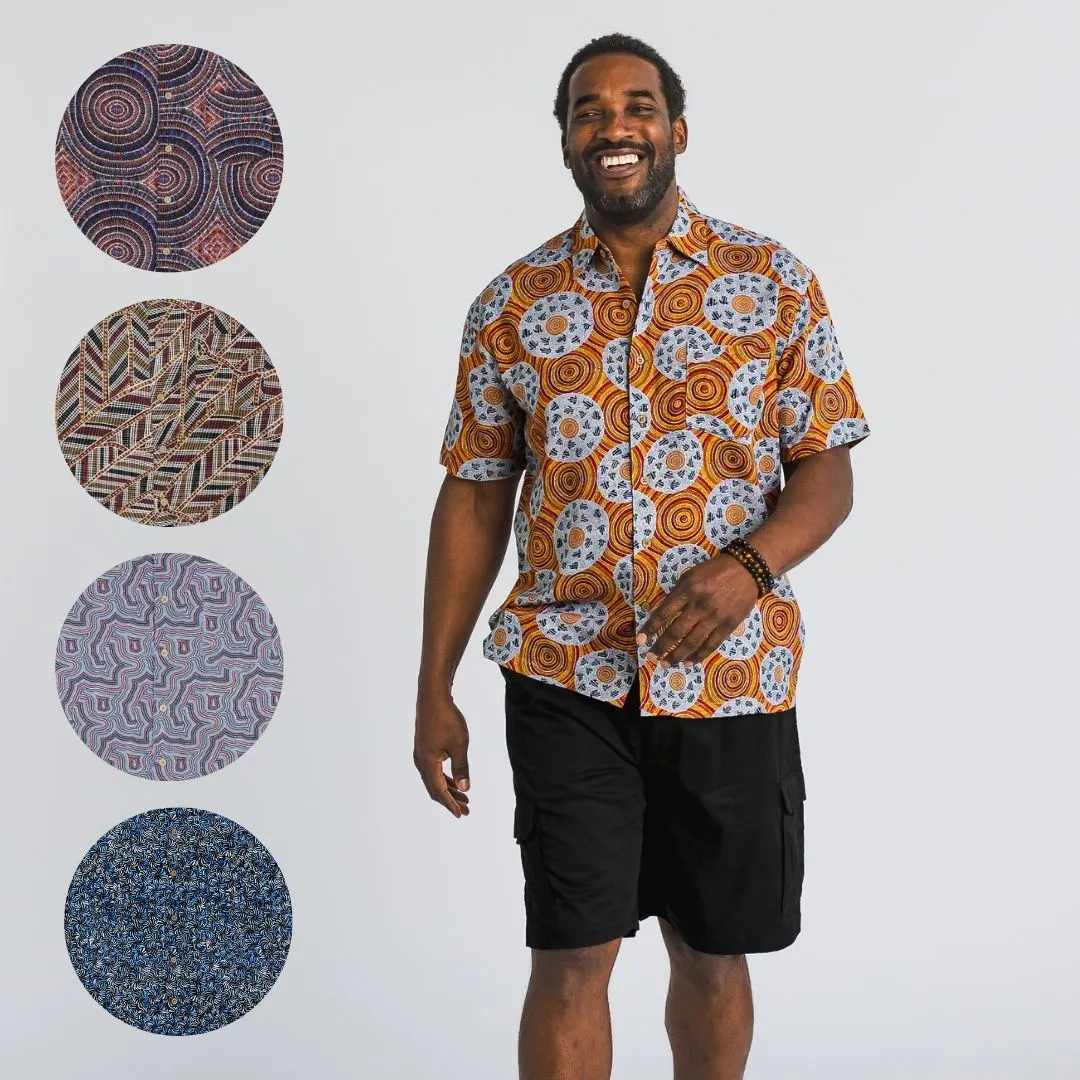
|
|
||||||||
|
SIZE |
S |
M |
L |
XL |
2XL |
3XL |
4XL |
5XL |
|
Across Chest (cm) |
59 |
61 |
63 |
65 |
67 |
69 |
71 |
73 |
|
Body Length (cm) |
74 |
76 |
78 |
80 |
82 |
84 |
86 |
88 |
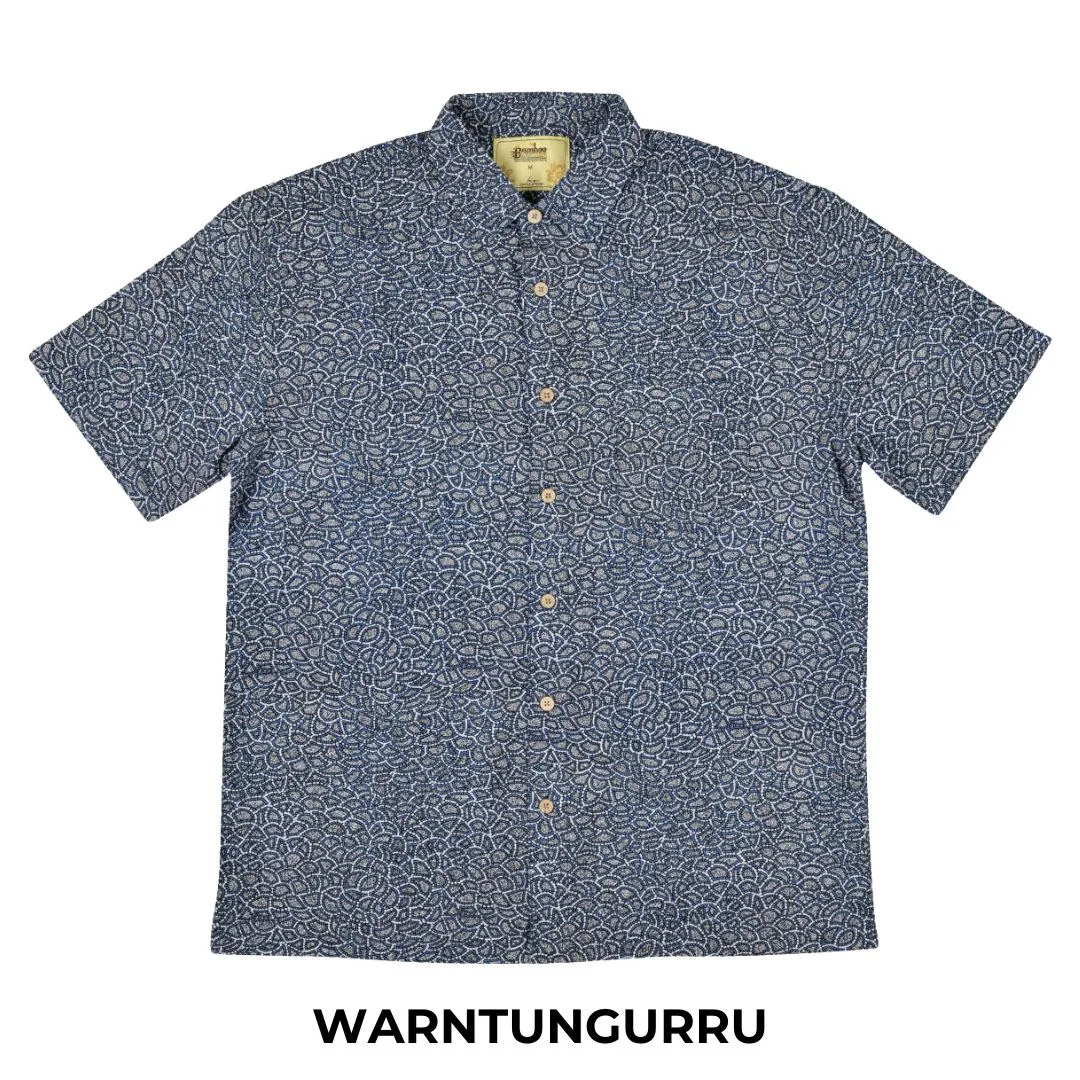
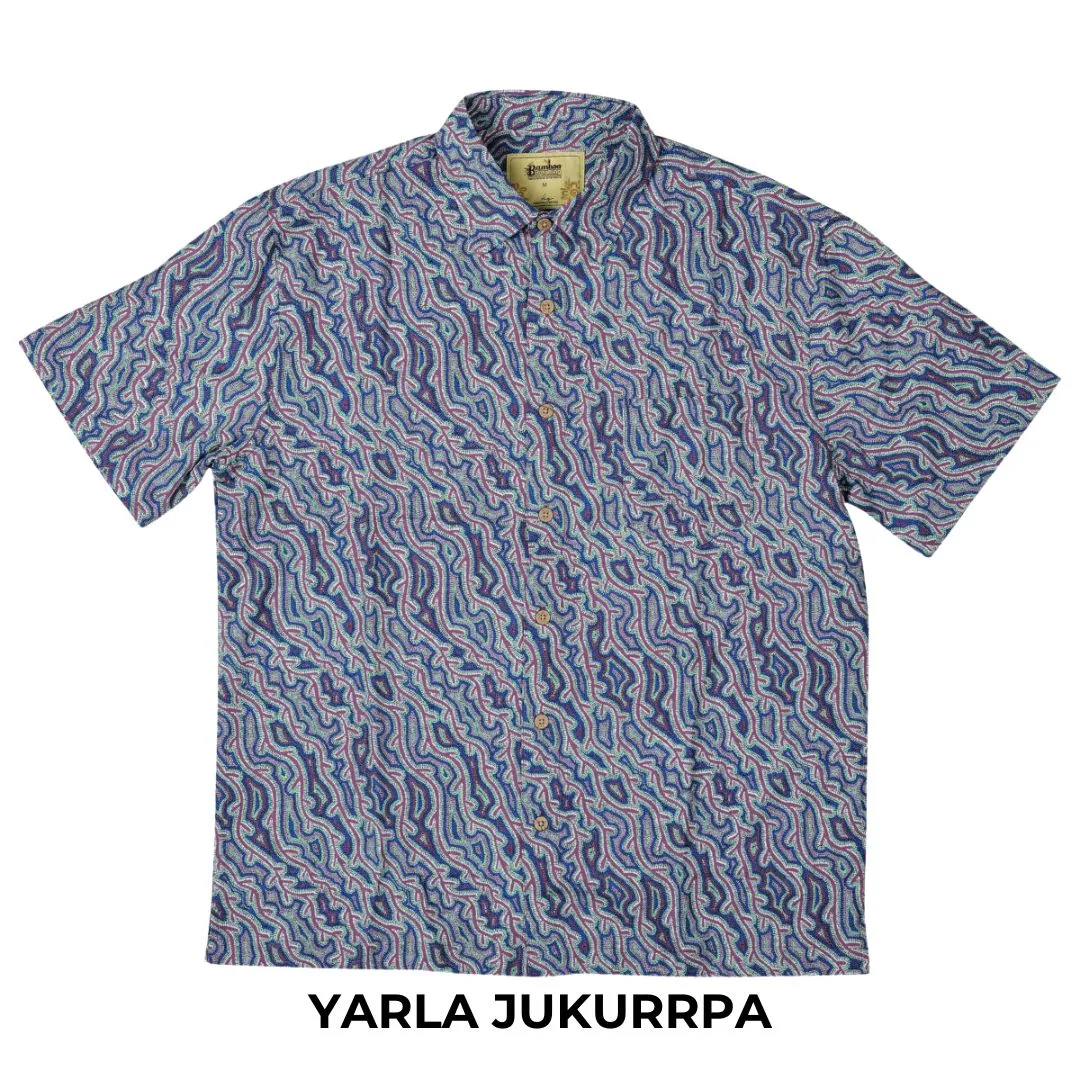
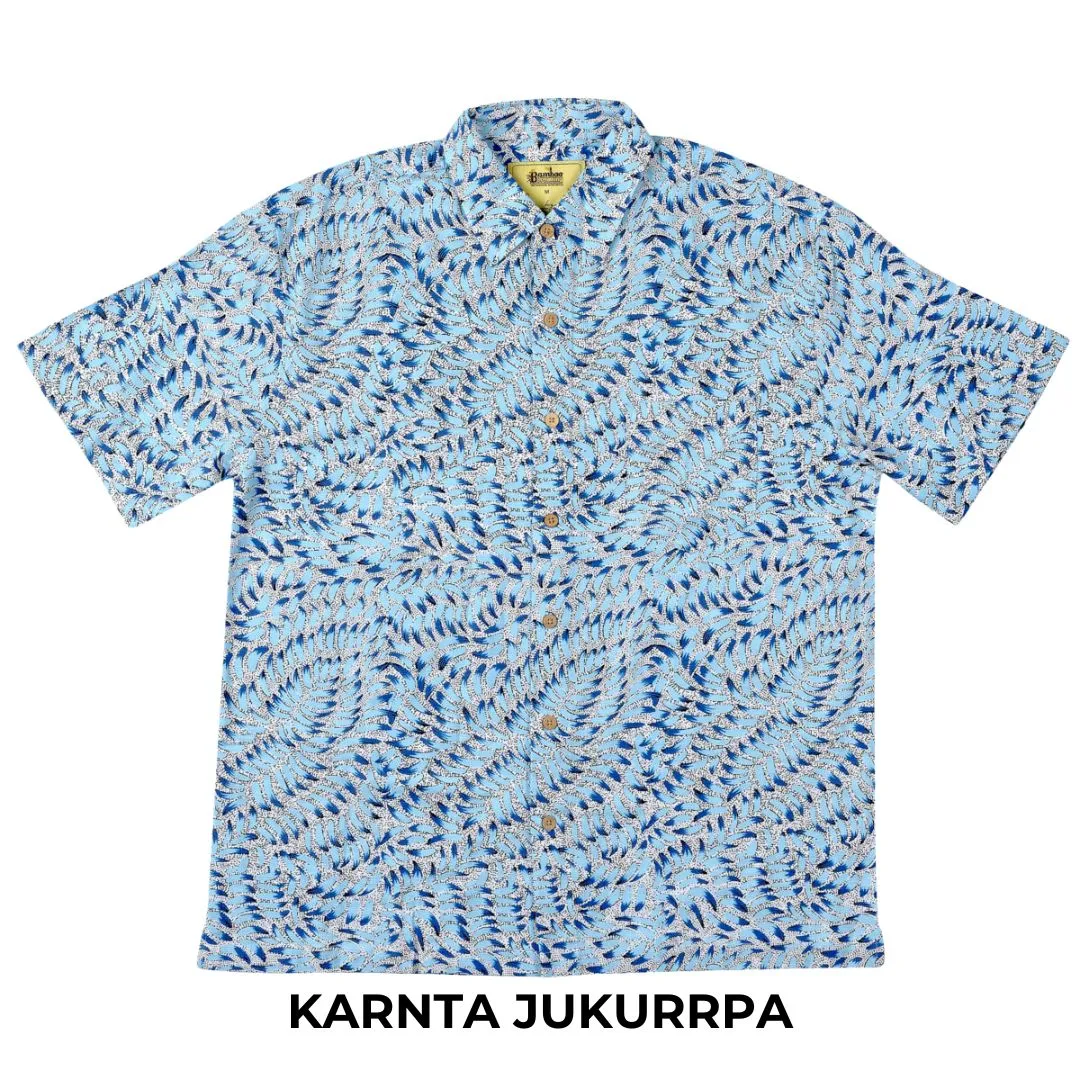
These designs were created in collaboration with the Warlukurlangu Artists Aboriginal Corporation, one of Central Australia’s longest-running Aboriginal-owned art centres. Each purchase helps support Warlpiri artists, their families, and community programs while sharing authentic Dreamtime stories through wearable art.
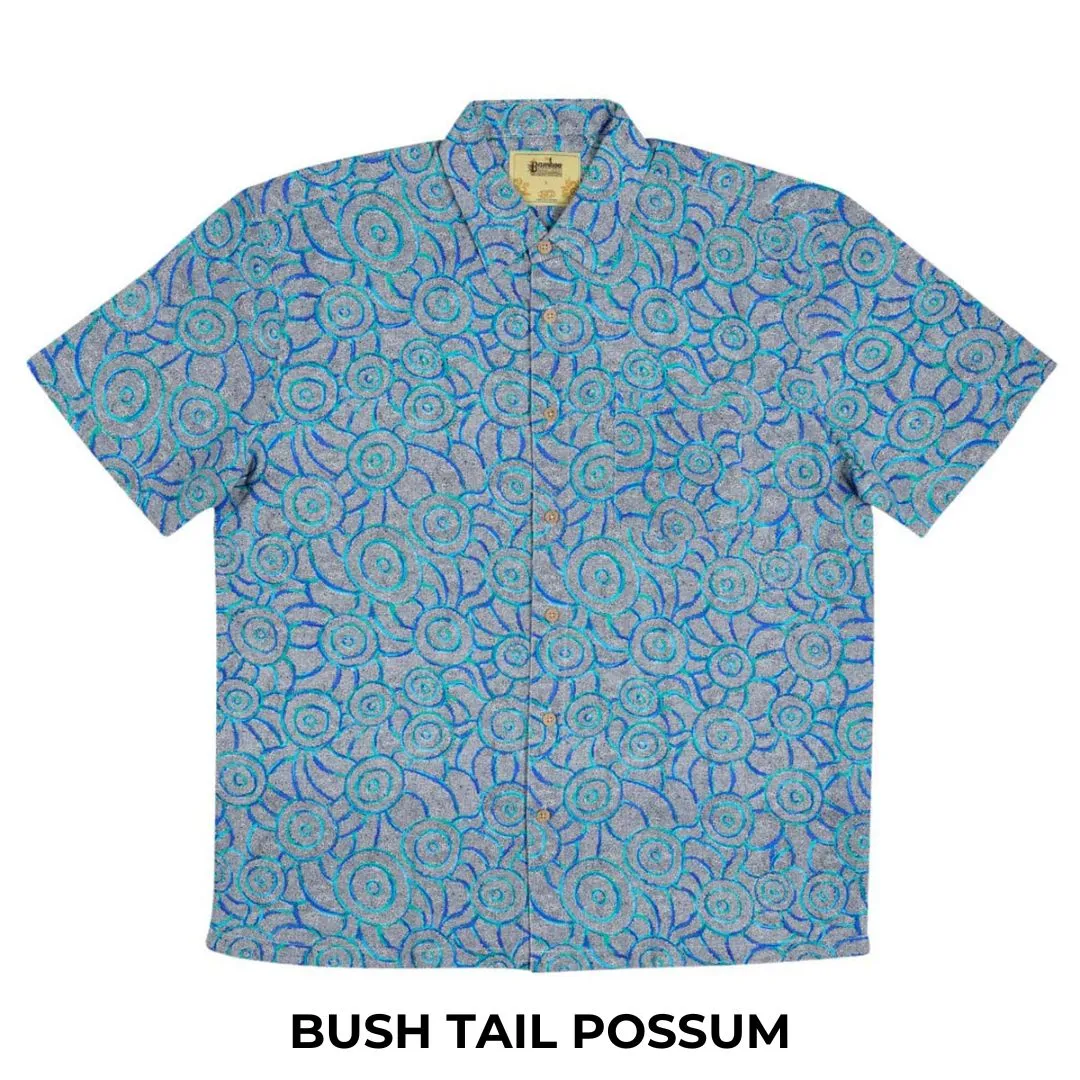
‘Janganpa’ (brush-tail / bush possum) ancestors travelled across Warlpiri country from Mawurrji, hunting at night and creating sacred places along their journeys. In paintings, “E”-shaped tracks and concentric circles represent possum footprints, trees, and key sites. This story belongs to Jakamarra/Jupurrurla men and Nakamarra/Napurrurla women.
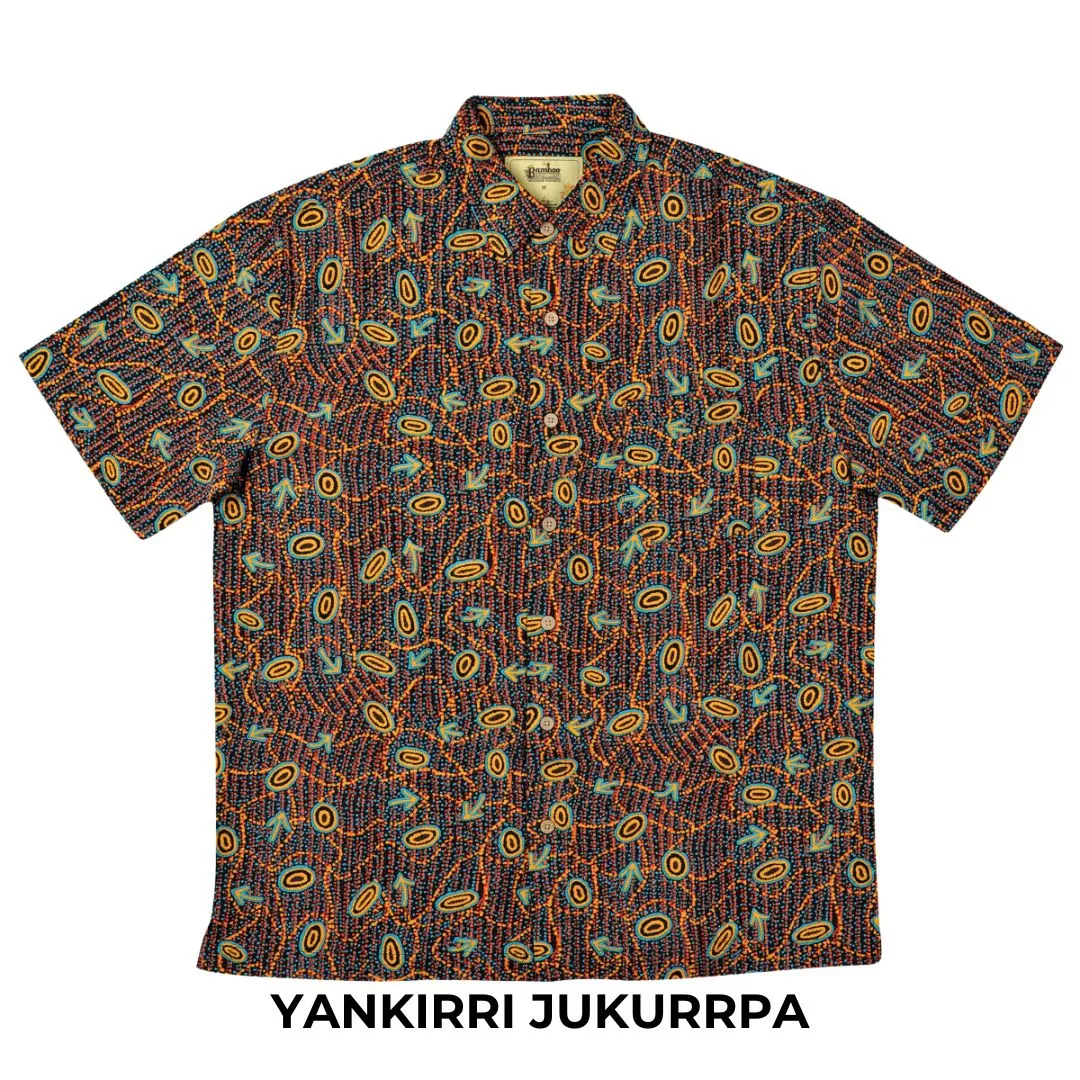
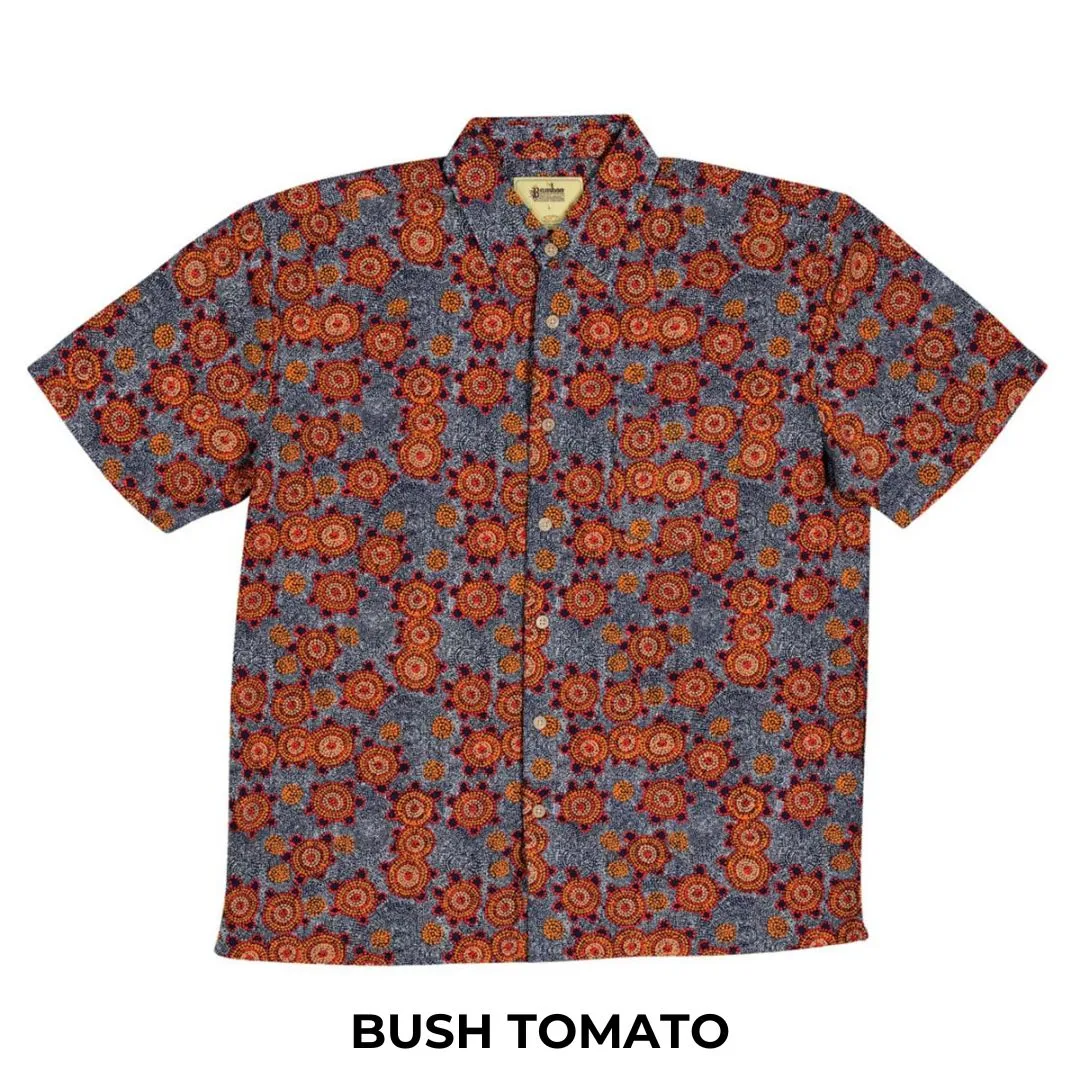
This story follows the bush tomato (Solanum chippendalei) around Yaturlu, where fruit is harvested, deseeded with a ‘kajalarra’ spoon, and eaten fresh or threaded and dried as ‘turlturrpa’. The artwork honours food gathering, preparation, and seasonal knowledge. It belongs to Napanangka/Napangardi women and Japanangka/Japangardi men.
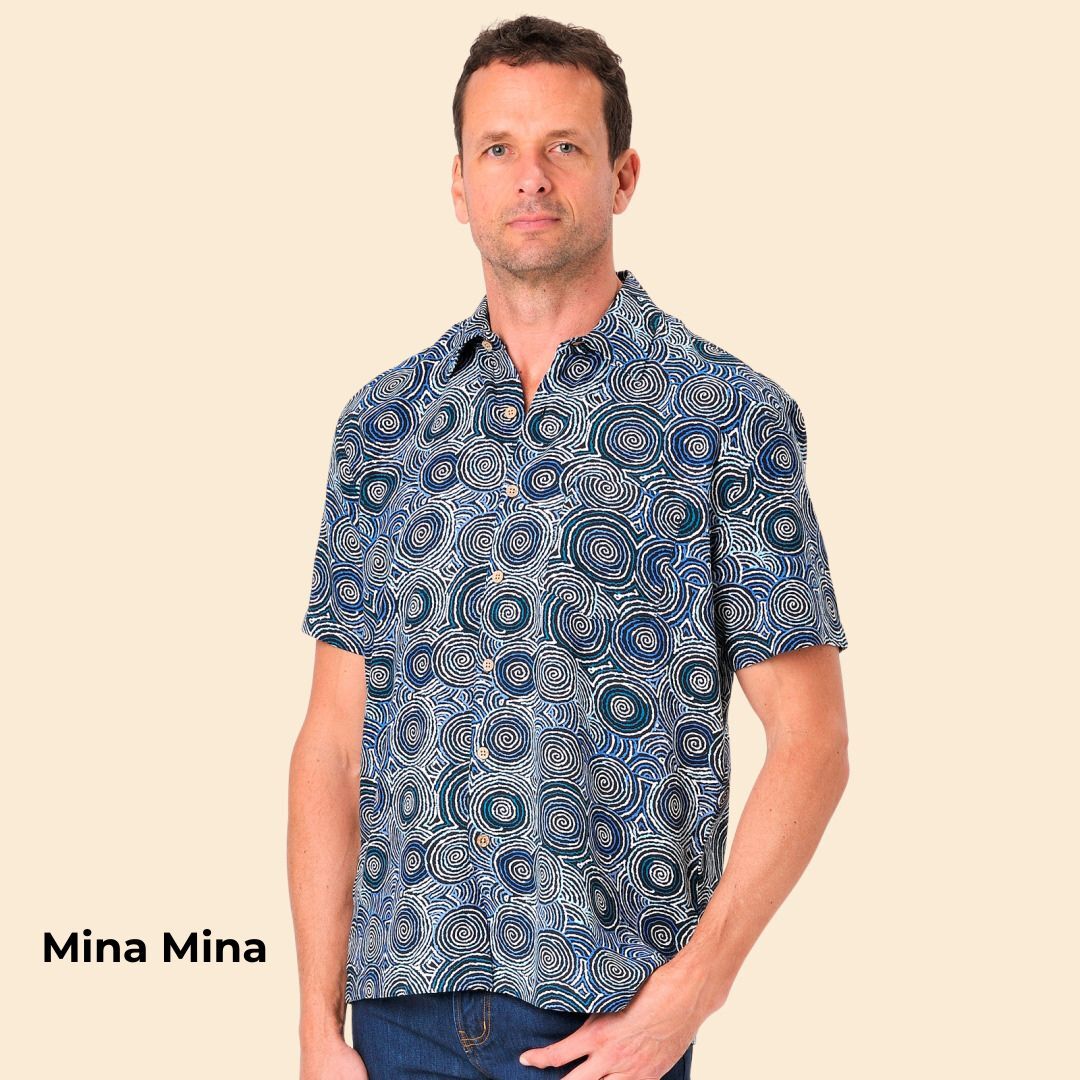
At the women’s site of Mina Mina, ancestral women danced and ‘karlangu’ (digging sticks) rose from the earth. Travelling east, they gathered ‘ngalyipi’ (snake vine) used for ceremony, carrying, and healing. Warlpiri motifs show sinuous vine lines, concentric truffle circles, and straight digging-stick lines.
A Jangala ancestor gathered seeds of the acacia ‘watiya-warnu’ while travelling south to Yamunturrngu (Mount Liebig). Seeds are collected, winnowed, and sometimes ground for food or used medicinally when immature. Paintings often show ‘U’ shapes (women), ovals (carriers/coolamons), and marks for digging sticks.
Deriving from Ben’s mother’s Jukurrpa of the Dhuwa clan, the work reflects the Yolŋu worldview of two interlinked moieties: Yirritja and Dhuwa. Everything — land, kinship, ceremony - belongs to one or the other, fitting together to complete a holistic balance.
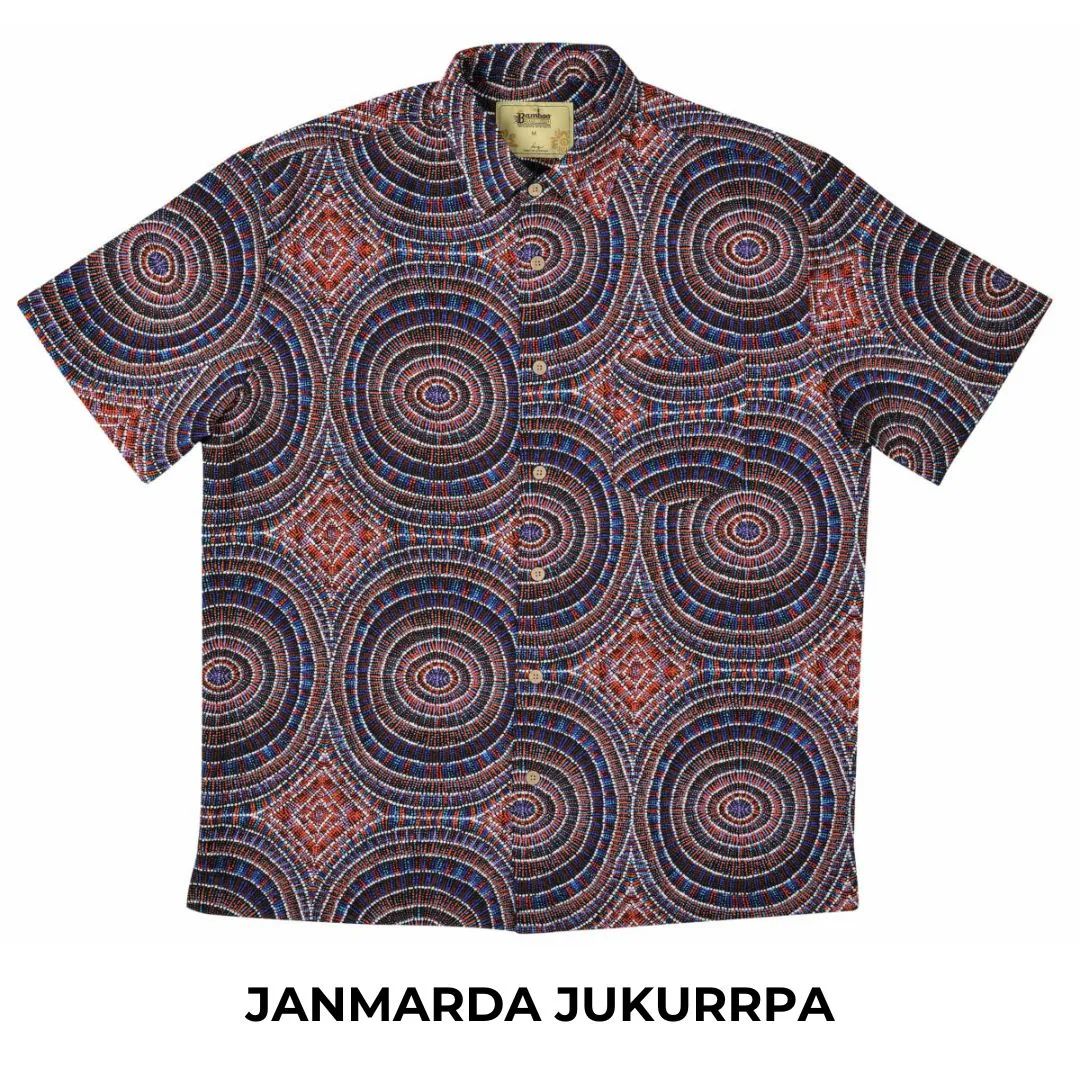
Lukarrara is a seed-bearing grass whose seeds are ground on stones to make flour for damper. Artworks show Jaralypari as large concentric circles, with ‘U’ shapes for women collecting seed and straight lines for falling seeds and tools. This story belongs to Nakamarra/Napurrurla women and Jakamarra/Jupurrurla men.
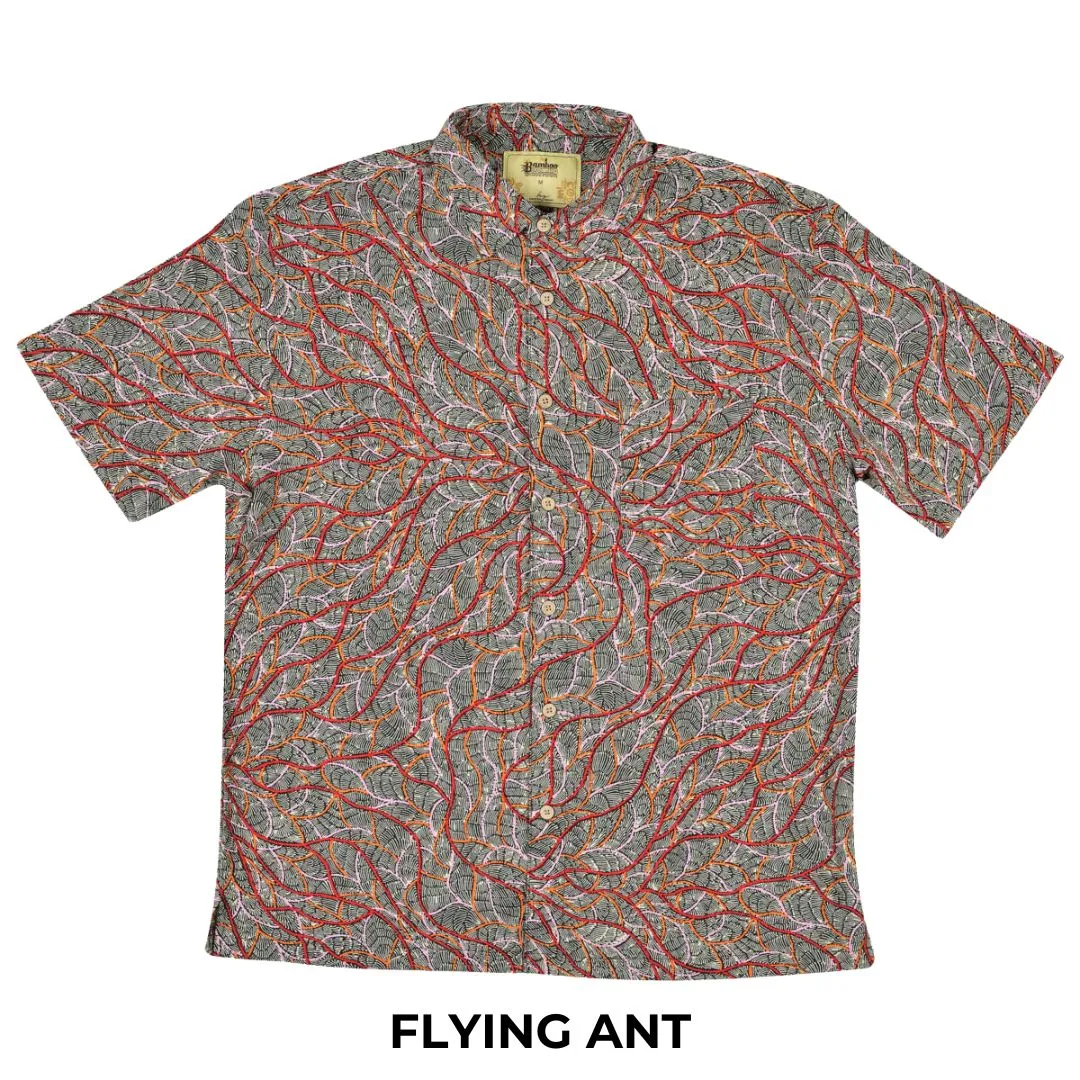
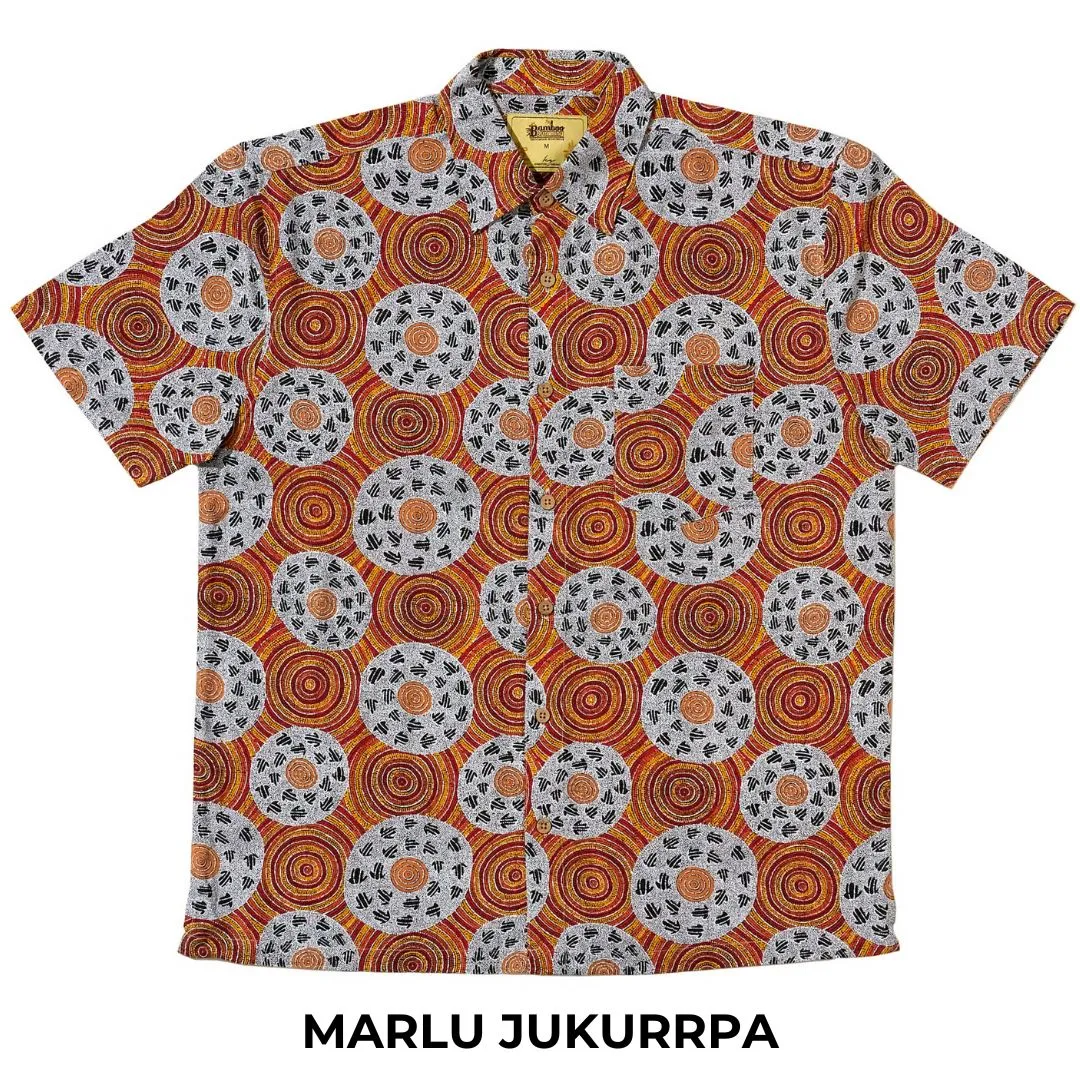
After summer rains, flying ants (‘pamapardu’) leave flooded mounds to form new nests, shedding wings along the way. The insects are traditionally collected and lightly cooked as a sweet seasonal food. Concentric circles denote mounds and rockholes; dash marks depict the flying ants in motion.
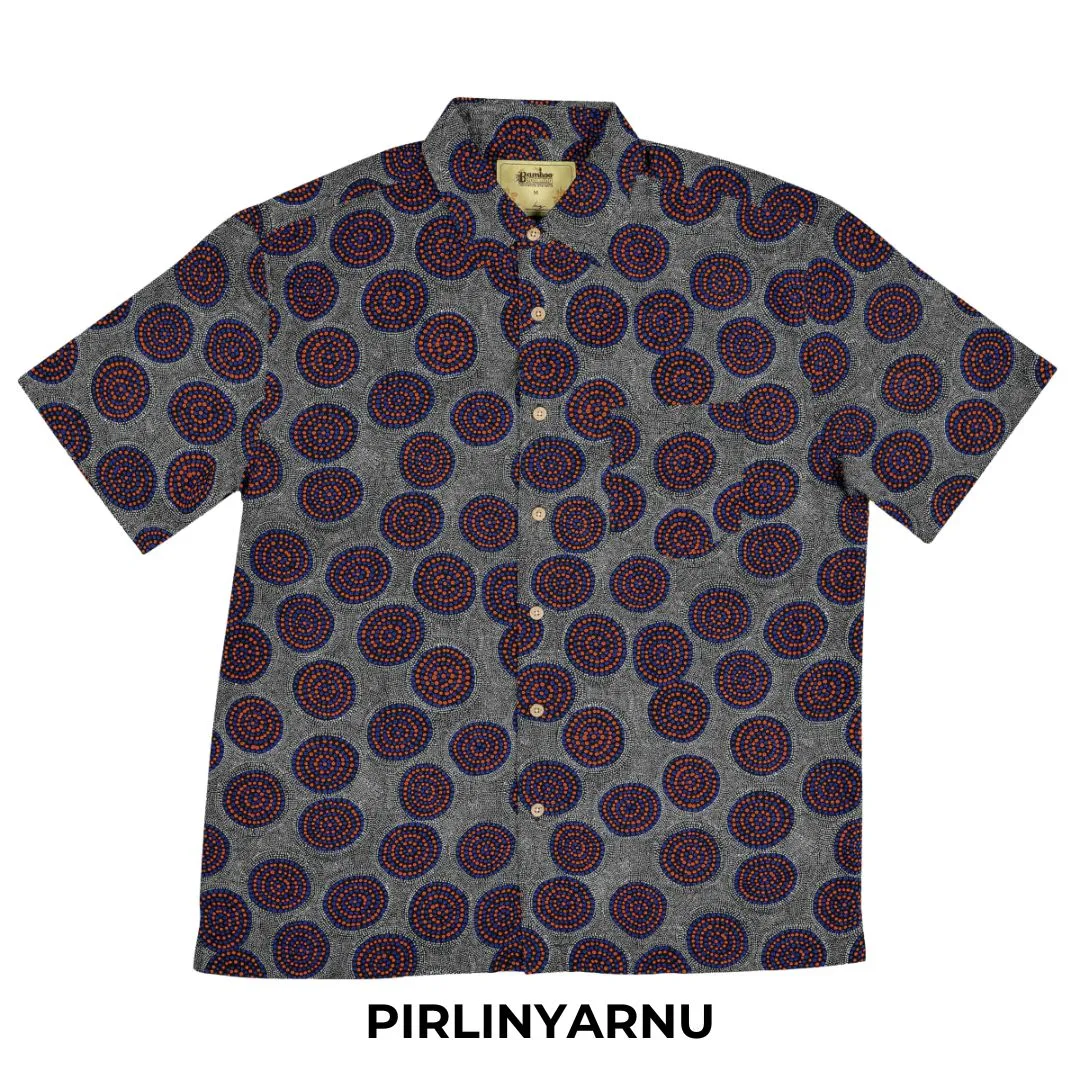
Rainmakers sang up storms that travelled across country before dropping water at Pirlinyarnu to form a great claypan and soakage. Motifs include short dashes for clouds, flowing lines for floodwaters, and small circles for soakages and riverbeds. This site is held by Nangala/Nampijinpa women and Jangala/Jampijinpa men.
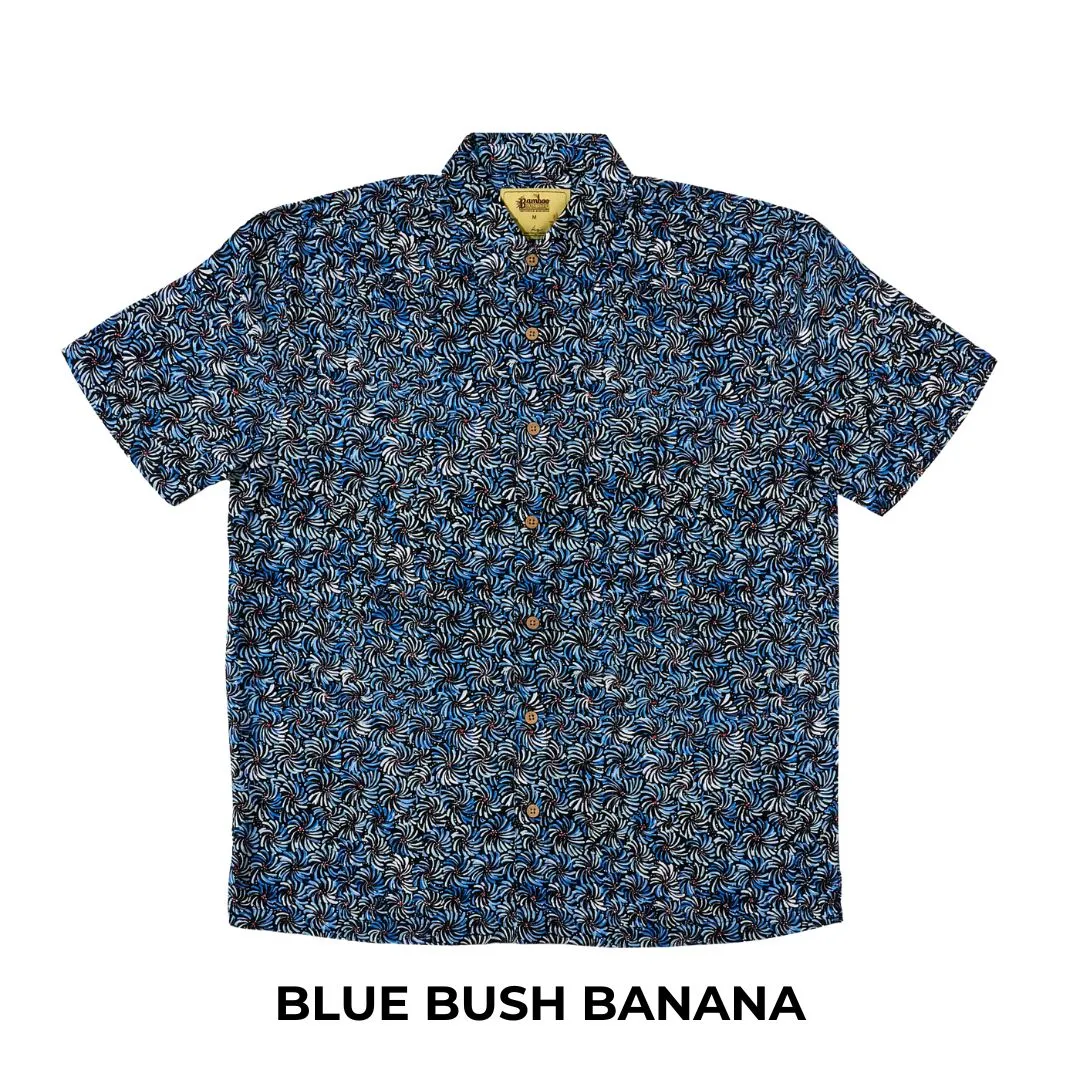
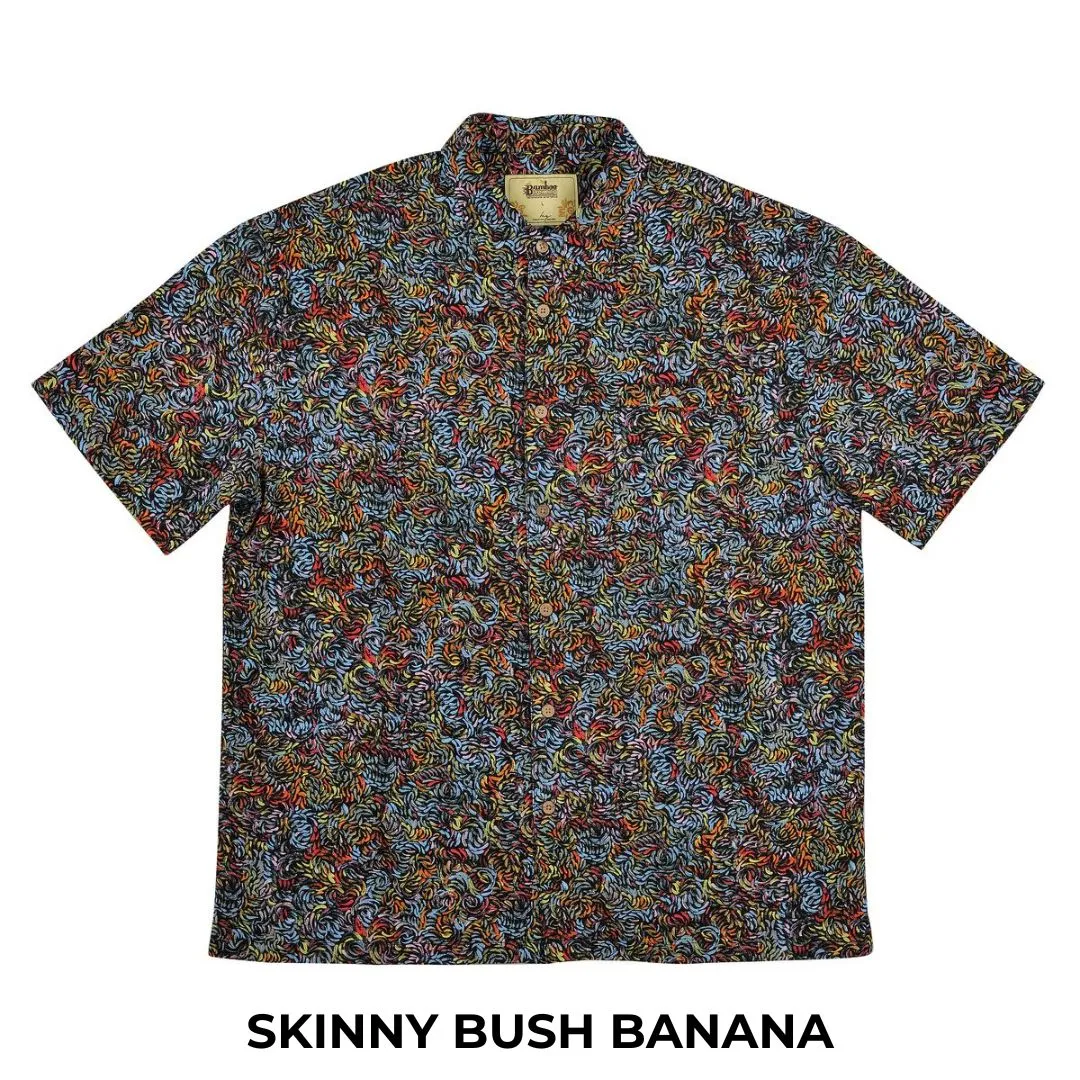
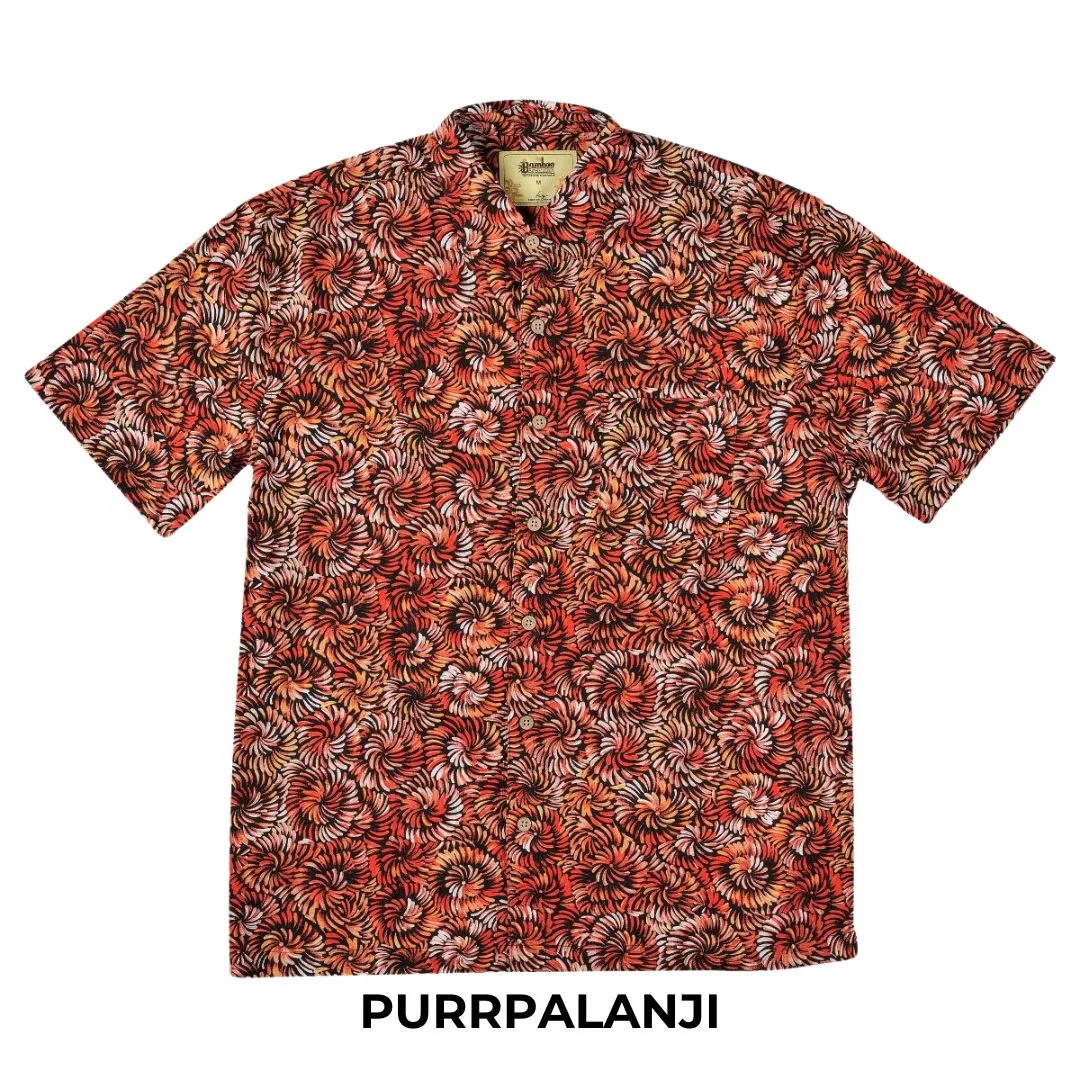
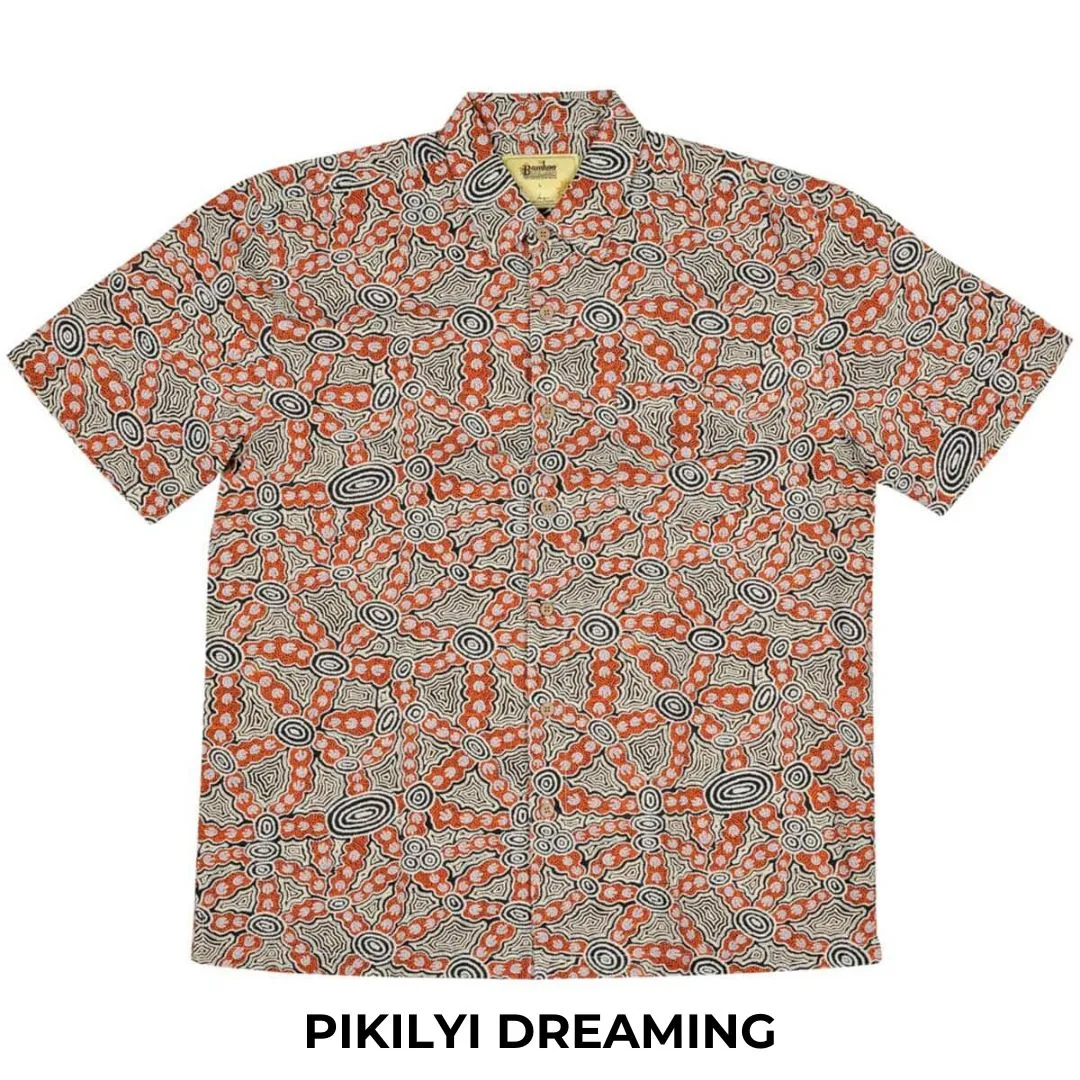
‘Purrpalanji’ is a climbing plant with long edible pods; most parts are eaten after proper preparation. This Dreaming centres on Pikilyi (Vaughan Springs), a major waterhole linked to multiple stories. Curved lines in the artwork echo the slender edible portion of the plant.
The ancestral kangaroo Warlawee ranged between Jurnti and Yarnardilyi, foraging by day and returning to camp by night, shaping country and ceremony. Concentric circles show rocks and camps; hooked and “E” shapes denote fore/hind footprints; long lines mark tail tracks. Custodians: Japaljarri/Jungarrayi men and Napaljarri/Nungarrayi women.
Pikilyi is home to two rainbow serpents - a sacred but taboo pairing across skin groups - who allowed women to draw water in return for care. Their spirits remain at the springs. The story belongs to Japanangka/Napanangka and Japangardi/Napangardi skin groups.
Another interpretation of the bush tomato story from Yaturlu, celebrating harvesting, threading, drying, and careful seed removal. Designs highlight the rhythms of country and women’s food knowledge. Custodianship aligns with Napanangka/Napangardi women and Japanangka/Japangardi men.
Emu and bush turkey gathered ‘yakajirri’ (bush raisins), shaping country through conflict and ceremony; the smashed red ‘kapurdu’ (fruit balls) remain as round rocks at Ngarlikirlangu. Arrow-like emu footprints are a common motif. This site holds several Dreamings and features in men’s initiation dances.
We acknowledge the Traditional Owners of the land and pay respects to Elders past and present.
Copyright of all artworks and text remains with the artists and Aboriginal Traditional Owners, administered by the Warlukurlangu Artists Aboriginal Corporation.
| SKU | BD |
| Brand | Kingston Grange |
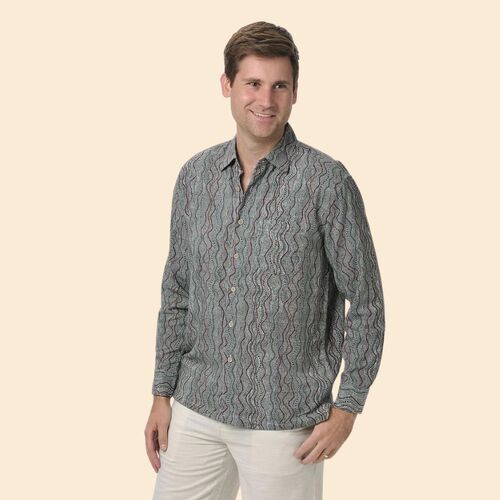
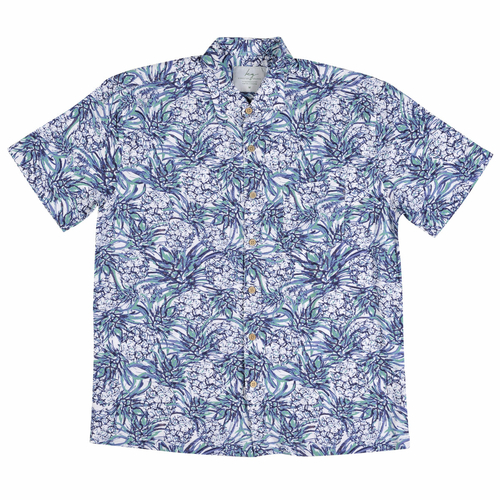
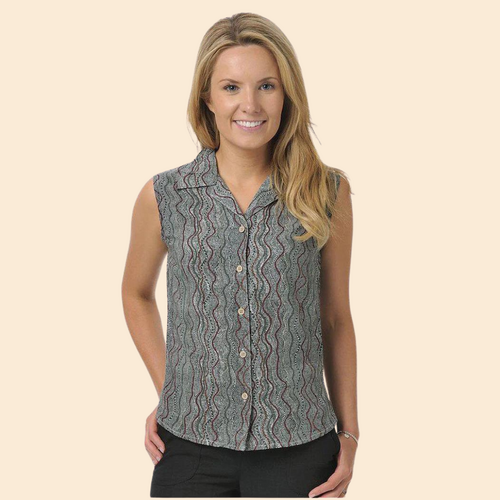
Celebrate the art, stories, and spirit of Australia with the Bamboo Dreaming Range - an exclusive collaboration between Kingston Grange and the Warlukurlangu Artists Aboriginal Corporation. Each shirt is a wearable canvas featuring authentic Dreamtime artworks, hand-painted by Warlpiri artists from Yuendumu in Central Australia.
Warlukurlangu is one of Australia’s longest-running and most respected Aboriginal-owned art centres. Through this partnership, each piece sold directly supports Indigenous artists, their families, and their communities - helping to preserve language, culture, and storytelling traditions that span tens of thousands of years.
Crafted from soft, breathable bamboo fabric, these shirts are comfortable in every season, naturally antibacterial, and beautifully lightweight.
Each artwork carries its own Dreamtime story - from the Janganpa Jukurrpa (Brush-Tail Possum Dreaming) to the Ngapa Jukurrpa (Water Dreaming) - connecting you to the deep landscapes, animals, and ancestral journeys of Australia’s heartland.
These shirts make meaningful, sustainable, and truly unique Australian gifts for Christmas, birthdays, or any special occasion.
For more information check out our buying guide here
Organically grown wild bamboo
Lightweight, breathable & antibacterial
Loose fit (size down if you are between sizes)
Chest pocket
Bamboo wood-look buttons
Designed in collaboration with Warlukurlangu Artists Aboriginal Corporation
Each purchase supports Indigenous artists and communities
Materials: 65% Bamboo Fiber, 35% Cotton
Care and Use Instructions: cold machine wash with like colours. Do not bleach, soak or rub
Do not tumble dry. Warm iron, Do not dry clean
We are here to help. For any size, fit or styling advice please contact us on +61 2 43342000, via info@madeinhemp.com.au or through the chat box below.
| Size | XS | S | M | L | XL | 2XL | 3XL | 4XL | 5XL | 6XL | 7XL |
|---|---|---|---|---|---|---|---|---|---|---|---|
| Across Chest (cm) | 57 | 59 | 61 | 63 | 65 | 67 | 69 | 71 | 73 | 75 | 77 |
| Body Length (cm) | 72 | 74 | 76 | 78 | 80 | 82 | 84 | 86 | 88 | 90 | 91 |
Tip: These shirts have a relaxed, easy fit. If you prefer a more tailored look, consider sizing down.